
In the rapidly evolving world of digital broadcasting, IPTV restream has become a vital term for those managing or distributing live television content online. IPTV, or Internet Protocol Television, refers to delivering television content over the internet instead of through traditional satellite or cable methods. Restreaming takes this concept a step further by allowing providers to rebroadcast existing IPTV streams to their own audience, often using dedicated servers or specialized restream sources.
For businesses in the streaming space, IPTV restreaming offers an efficient and scalable way to distribute high-quality channels without maintaining the original broadcast infrastructure. It’s a behind-the-scenes process that powers thousands of IPTV services around the world — yet it remains one of the least understood parts of the streaming industry.
What Is IPTV Restreaming?

In simple terms, IPTV restreaming means receiving a live channel or video stream from one source and redistributing it to another audience or platform. Instead of creating a new broadcast feed, a restream setup takes an existing one and redistributes it — often with customized settings, bitrates, or formats optimized for different audiences.
For example, an IPTV provider may not have direct rights to capture live signals from broadcasters. Instead, they work with a restream provider who supplies stable feeds for multiple channels. These restreams are then integrated into the provider’s platform, where they can be offered to viewers as part of an IPTV subscription or service package.
At its core, IPTV restreaming is about efficiency. It eliminates the need for each IPTV operator to build expensive encoding and capturing setups, letting them focus instead on customer experience, reliability, and support.
How IPTV Restreaming Works

The technical side of IPTV restreaming involves several moving parts — from source acquisition to stream distribution. Here’s a step-by-step look at how the process typically works:
1. Acquiring the Source Stream
The process starts with obtaining a reliable and high-quality video feed. This could be from a licensed provider, a satellite capture, or an existing IPTV stream. Restream providers ensure that the source stream is stable, consistent, and encoded properly to minimize buffering or downtime.
2. Transcoding and Format Conversion
Once the source feed is captured, it’s usually transcoded — converted into different resolutions and bitrates using codecs such as H.264 or H.265. This step ensures that the stream can be delivered smoothly across various devices, including smart TVs, mobile apps, and web players. Transcoding also helps optimize bandwidth usage, balancing quality and performance for users with different internet speeds.
3. Stream Distribution and Load Balancing
The transcoded streams are then distributed to multiple servers around the world. Load balancing plays an important role here: it distributes viewer traffic evenly across available servers, preventing overload and ensuring stable performance even during peak viewing times. Many restream providers use content delivery networks (CDNs) or custom-built infrastructure to handle this efficiently.
4. Integration into IPTV Panels or Middleware
After the streams are ready, IPTV operators integrate them into their platforms using middleware or IPTV control panels such as Xtream UI, Ministra, or custom-built dashboards. These tools allow providers to manage channel lists, create packages, and deliver the content to subscribers seamlessly.
Why IPTV Restreaming Matters
The biggest advantage of using an IPTV restream solution lies in its practicality. For IPTV resellers, startups, or growing platforms, restreaming provides an instant gateway to a large number of TV channels without the need for technical setups or costly encoders. It reduces infrastructure expenses while maintaining the quality users expect from modern streaming services.
Moreover, restreaming helps small and medium IPTV services compete in a crowded marketplace. Instead of sourcing individual channels, they can focus on building a strong user base and offering competitive pricing models. This is why many successful IPTV operations rely on trusted restream providers like IPTV RestreamHub to power their channel distribution backbone.
The Technical Components Behind IPTV Restreams
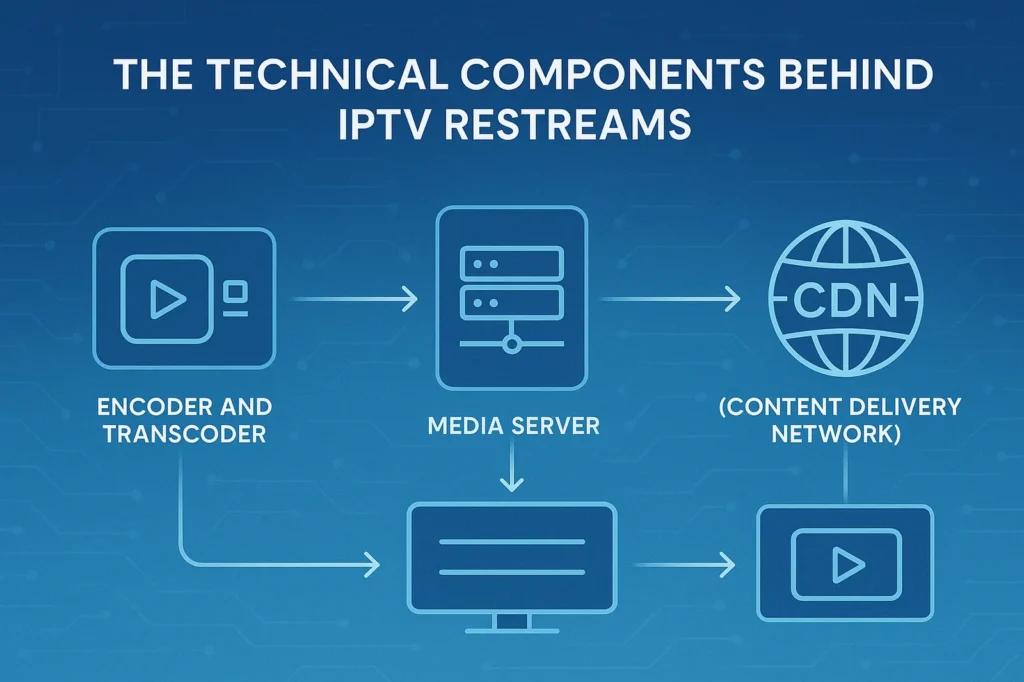
To understand how IPTV restreaming fits into the bigger picture, it helps to look at the key components involved in the process. Each element plays a unique role in ensuring stable performance and high-quality delivery.
Encoder and Transcoder
An encoder compresses the raw video signal into a digital format suitable for internet transmission. The transcoder then takes that encoded stream and adjusts it for different devices, bitrates, and resolutions. This process ensures compatibility across mobile, desktop, and smart TV platforms.
Media Server
Media servers act as the backbone of any IPTV restream setup. They receive, process, and distribute the video feeds to end-users. Common media servers include Wowza, Nimble Streamer, and Flussonic — all known for their scalability and real-time performance.
CDN (Content Delivery Network)
To deliver stable and fast streams globally, IPTV restream providers often rely on CDNs. These networks of servers ensure that viewers connect to the nearest server, reducing latency and buffering. Companies like Cloudflare and Akamai provide reliable CDN solutions widely used in the streaming industry.
Player Integration
Finally, the IPTV player is where everything comes together for the viewer. Whether through Smart IPTV, Tivimate, or custom apps, the player fetches the streams from your panel and displays them in an intuitive interface. Compatibility and playback optimization are crucial to a smooth viewer experience.
Benefits of IPTV Restreaming
For IPTV operators and entrepreneurs, restreaming brings several benefits that make it the preferred method for running large-scale streaming services efficiently.
Lower Costs and Reduced Setup Time
Building your own headend infrastructure can be expensive and complex. IPTV restreaming eliminates the need for satellite equipment, encoders, and multiple licenses. With a reliable provider, you can have hundreds of channels ready for integration in just a few hours.
High Availability and Reliability
Most restream providers maintain multiple redundant sources to ensure uptime and consistency. Even if one feed drops, another backup takes over automatically. This redundancy helps ensure a smooth experience for the end user and reduces support issues for IPTV resellers.
Scalability and Flexibility
Restreaming allows providers to scale up or down easily. Whether you’re serving a small community or thousands of global viewers, a solid IPTV restream setup can handle the growth without changing your entire infrastructure. It’s a modular approach that fits both small startups and established IPTV operations.
Better Focus on User Experience
Instead of spending time managing hardware or decoding signals, IPTV businesses can focus on improving their platform’s usability, customer service, and content curation. Ultimately, this leads to happier subscribers and lower churn rates.
Challenges and Considerations in IPTV Restreaming
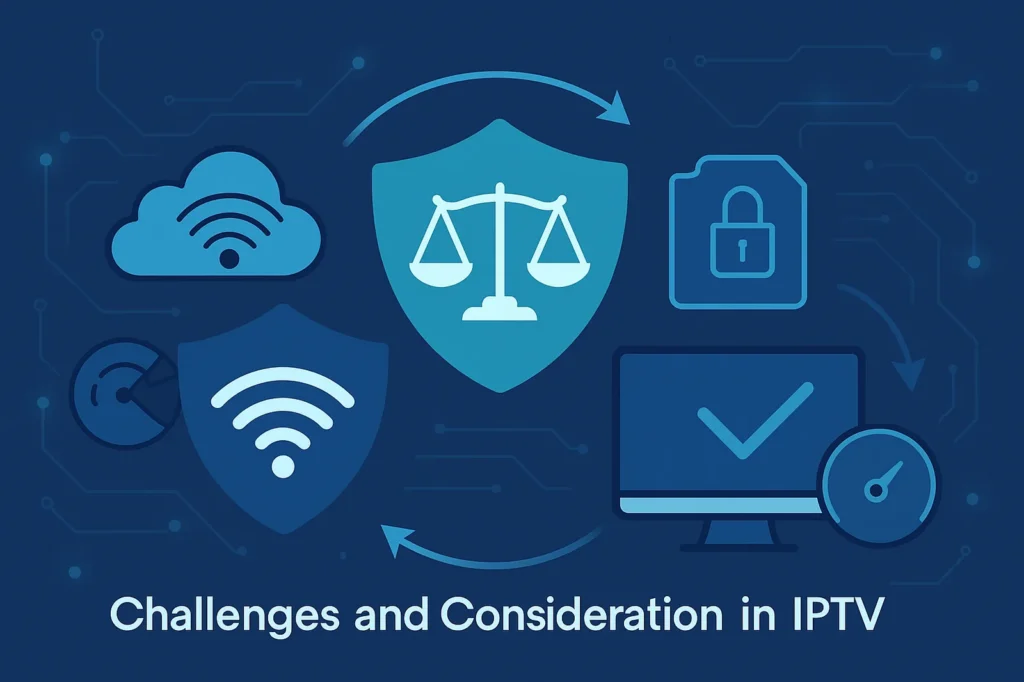
While IPTV restreaming brings clear advantages, it also comes with technical and operational challenges that providers should be aware of. Maintaining stable uptime, ensuring legal compliance, and managing bandwidth usage are just a few of the areas that require attention.
Bandwidth and Network Management
Restreaming large volumes of video data requires robust network capacity. Insufficient bandwidth can lead to buffering, pixelation, or connection drops. Choosing a provider that uses strong backbone connections and distributed data centers helps minimize these risks. For more insight on how bandwidth affects streaming quality, see this FCC broadband guide.
Legal and Copyright Awareness
One of the most important considerations in IPTV restreaming is content legality. Providers must ensure they are only redistributing content they have rights to or that is legally licensed. Many legitimate IPTV restream services operate within proper agreements or focus on FTA (free-to-air) channels. Transparency and compliance not only protect your business but also build long-term trust with partners and clients.
Technical Stability and Monitoring
Continuous monitoring of streams is crucial to maintain service quality. Most professional IPTV restream setups include automated monitoring systems that track bitrate, uptime, and latency in real time. These systems can alert operators instantly when a channel goes down, allowing for quick recovery and minimal user impact.
How to Choose a Reliable IPTV Restream Provider
Selecting the right IPTV restream provider can make or break your service quality. Here are a few key factors to consider when making that choice:
Quality and Stability of Streams
Look for providers who offer stable, high-definition channels with minimal downtime. It’s also essential that they provide consistent bitrate and quality across regions.
Support and Communication
A responsive support team can make all the difference when managing live channels. Choose a provider that offers round-the-clock support and fast response times to any technical issues.
Transparent Pricing
Reliable IPTV restream services should have clear and transparent pricing structures. Avoid hidden costs or unreliable “unlimited” offers that compromise quality or uptime.
Scalability Options
Your chosen provider should allow you to expand your channel lineup or bandwidth as your audience grows. Flexible scaling ensures that you can keep up with customer demand without service interruptions.
IPTV Restream vs Traditional IPTV Hosting
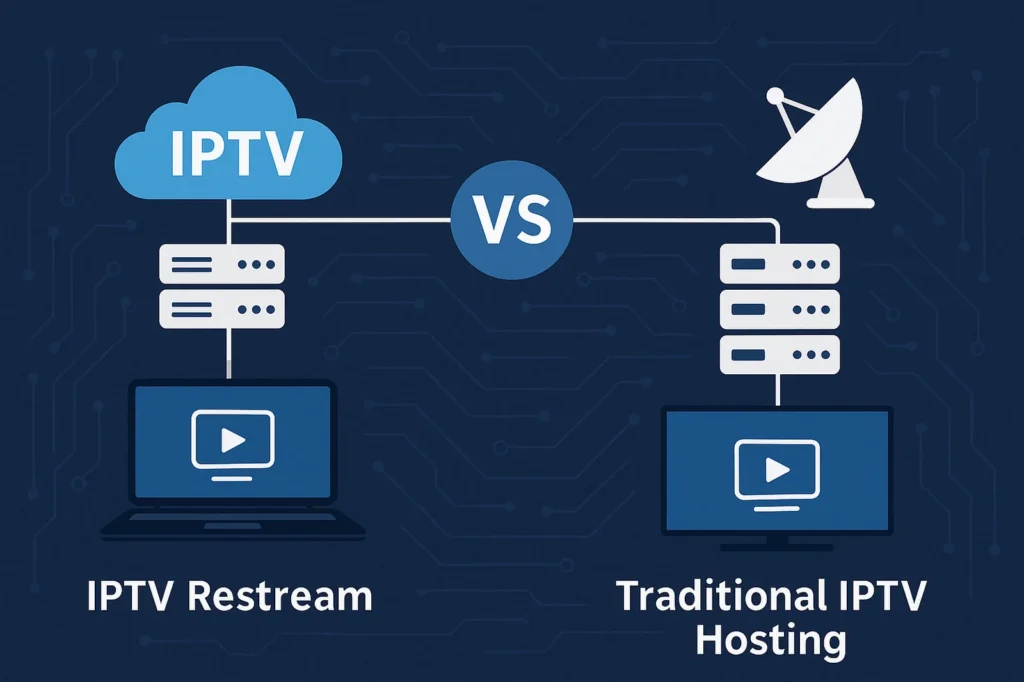
It’s easy to confuse IPTV restreaming with IPTV hosting, but the two are distinct. Hosting refers to setting up your own IPTV system, sourcing channels directly, and managing encoding and distribution yourself. Restreaming, by contrast, is the process of redistributing already prepared and encoded feeds from another provider.
While hosting gives full control, it’s costly and time-consuming to maintain. Restreaming offers a quicker, more economical route to launch or expand an IPTV service while maintaining quality standards. For small and mid-sized IPTV companies, restreaming is often the most practical option to compete in the market efficiently.
Future of IPTV Restreaming
As internet infrastructure continues to improve and global streaming demand grows, IPTV restreaming is expected to play an even more central role in digital broadcasting. Emerging technologies like adaptive bitrate streaming, cloud-based encoding, and AI-driven quality control will further enhance stability and efficiency.
Another trend is the shift toward hybrid solutions where IPTV restreams combine with OTT (over-the-top) content platforms. This approach enables IPTV operators to blend live channels, on-demand libraries, and interactive features within a single app experience, offering users more value and flexibility than ever before.
Conclusion
IPTV restreaming is the hidden engine behind many of today’s successful streaming services. It simplifies distribution, reduces infrastructure costs, and allows IPTV operators to focus on what matters most — delivering a smooth and enjoyable viewing experience to users.
Whether you’re an IPTV reseller, content distributor, or service provider, understanding how restreaming works gives you the power to optimize performance and reliability. For those seeking a stable, professional solution, partnering with a trusted provider such as IPTV RestreamHub can make all the difference in quality, uptime, and long-term scalability.
FAQs About IPTV Restreaming
What does IPTV restream mean?
IPTV restream refers to the process of taking an existing live TV or video stream and redistributing it to other users or platforms. It’s commonly used by IPTV providers to expand their channel offerings without having to maintain their own broadcast infrastructure.
Is IPTV restreaming legal?
IPTV restreaming is legal when done with proper rights and permissions. Legitimate restream services only distribute licensed or free-to-air content. Unauthorized redistribution of copyrighted content without permission is illegal and can result in penalties.
Why should IPTV providers use restream services?
Restream services simplify operations, reduce costs, and ensure reliable streaming performance. By outsourcing channel sourcing and encoding, IPTV operators can focus on improving their platform, support, and user satisfaction instead of handling complex technical setups.